· 7 min read
What to do in Málaga when it rains
A rainy day in Málaga on foot from the centre: the Picasso Museum with Munch until 28 February 2027, Atarazanas market and the Thyssen.
Mid-morning in the old town, and it’s raining. The narrow streets empty, café awnings drip and the stone paving shines. On Calle San Agustín the door of the Palacio de Buenavista is open, and inside, in the galleries, the street is left behind: only footsteps and lowered voices. Málaga isn’t built for water, and yet a grey day in the centre has something the sunny ones don’t: the city draws in, and you can look at it slowly.
In short
When it rains in Málaga, stay in the centre and walk between covered places: the Picasso Museum, showing “Munch-Picasso. Influences and Affinities” until 28 February 2027; Atarazanas market in the morning (Monday to Saturday); and the Carmen Thyssen Museum in the afternoon. All three are a few minutes’ walk from one another.
| Place | Where | When |
|---|---|---|
| Picasso Museum Málaga: “Munch-Picasso” | Palacio de Buenavista, Calle San Agustín 8 | 30 October 2026 to 28 February 2027 |
| Atarazanas Central Market | Calle Atarazanas 10 | Monday to Saturday, 8am to 3pm; closed on Sundays |
| Carmen Thyssen Museum Málaga | Calle Compañía, old town | Hours on its website; last entry half an hour before closing |
When does it rain in Málaga?
Not often, but when it does, you notice. November and December are, on average, Málaga’s wettest months, though not every year: some autumns are almost dry, and in others the rain comes in a few days back to back. If you’re travelling at this time of year, check the AEMET forecast the evening before and leave one day of your trip unplanned. That’s the day you can move around.
The awkward part, plainly: the city isn’t used to rain. The stone paving in the centre gets slippery when wet, in the narrow streets two umbrellas don’t fit side by side, and many terraces pack up. Shoes with a good grip and a small umbrella will do more for your day than any plan.
What’s on at the Picasso Museum this winter?
This winter the museum sets two painters side by side who never actually met. “Munch-Picasso. Influences and Affinities” brings together 104 works — paintings, drawings and self-portraits — many of them lent by the Munch Museum in Oslo, and it’s the first time the two have been shown together in Spain. The route runs by theme rather than by date, so you can walk in knowing nothing about either and come out with something to talk about over lunch.
Two simple tips. Go first thing: on rainy days the museums in the centre fill up as the morning goes on. And buy your ticket in advance on the museum’s website, especially at weekends or on a long weekend; you’ll also find the current opening hours and price there, which we don’t give here because they change with the season.
Where to eat when it rains?
At Atarazanas market, a few minutes from Calle Larios. You go in through an arched gateway that once belonged to the old Nasrid shipyard, and under its iron roof the rain is only a sound. In the morning there are stalls of fish, fruit and olives, and a few counters where you can eat standing up whatever has just come in. Mind the hours: Monday to Saturday, and only until 3pm; it’s closed on Sundays.
If you’re staying in El Molinillo, there’s another covered market a minute from the door: the Salamanca market, a small neo-Mudéjar building where the neighbourhood does its shopping.
And in the afternoon?
The Carmen Thyssen Museum, on Calle Compañía, holds mainly 19th-century Spanish painting with a great deal of Andalusia in it: scenes of everyday life, landscapes and the southern light painted by people who lived in it. A rainy day is a good time to see it: outside, a grey city; inside, the same land in the sun more than a century ago. Check the day’s opening hours and any temporary exhibition on its website first.
And then, nothing. Walk home without hurrying, put the coffee on and let the afternoon go by. Travelling slowly is this too: not filling the gap the rain leaves.
Where to stay for a rainy day?
A rainy day is when sleeping in the centre matters most: everything above is on foot and you don’t depend on a slow taxi or a crowded bus. The house matters too. One that works in winter has light even under a grey sky, and somewhere you want to stay in the afternoon.
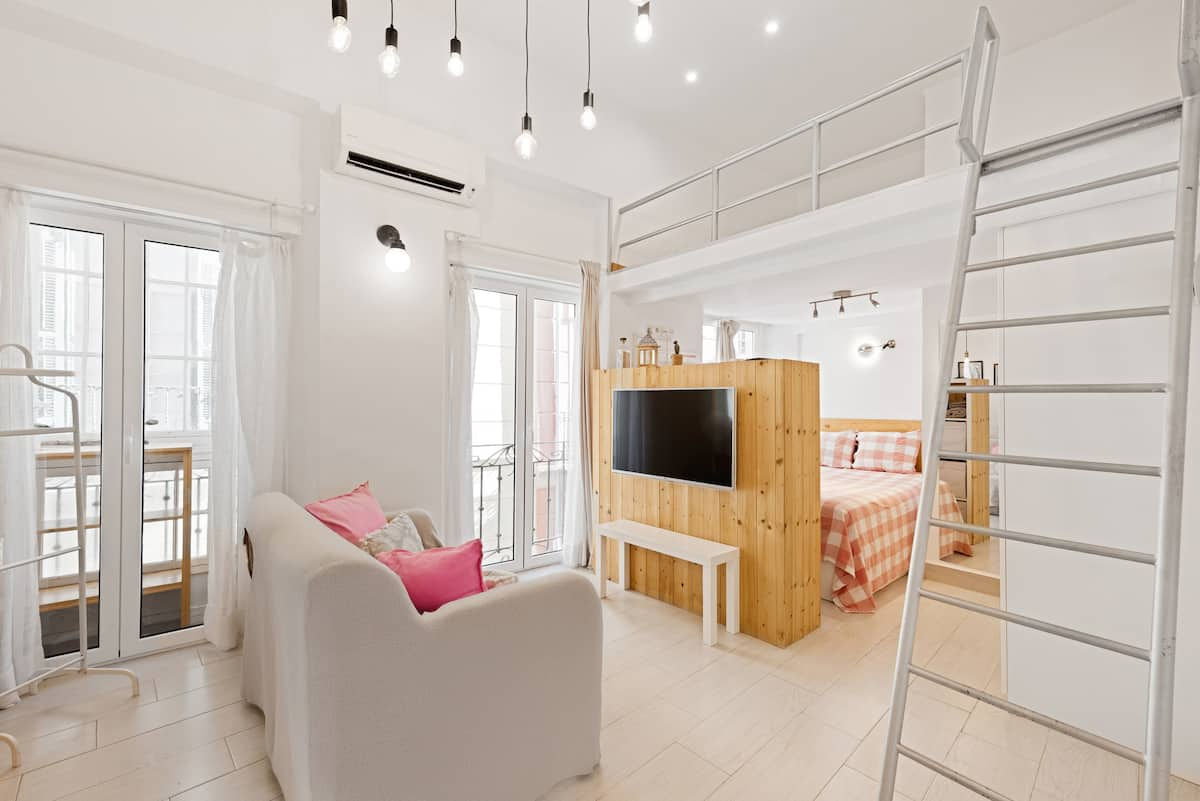
The loft is right in the old town, a 4-minute walk from the Picasso Museum and 8 from Calle Larios: high ceilings, white walls and two French balconies over a street of coloured façades. It sleeps two and the minimum stay is three nights. It’s a lively street: at weekends you may hear people out at night.
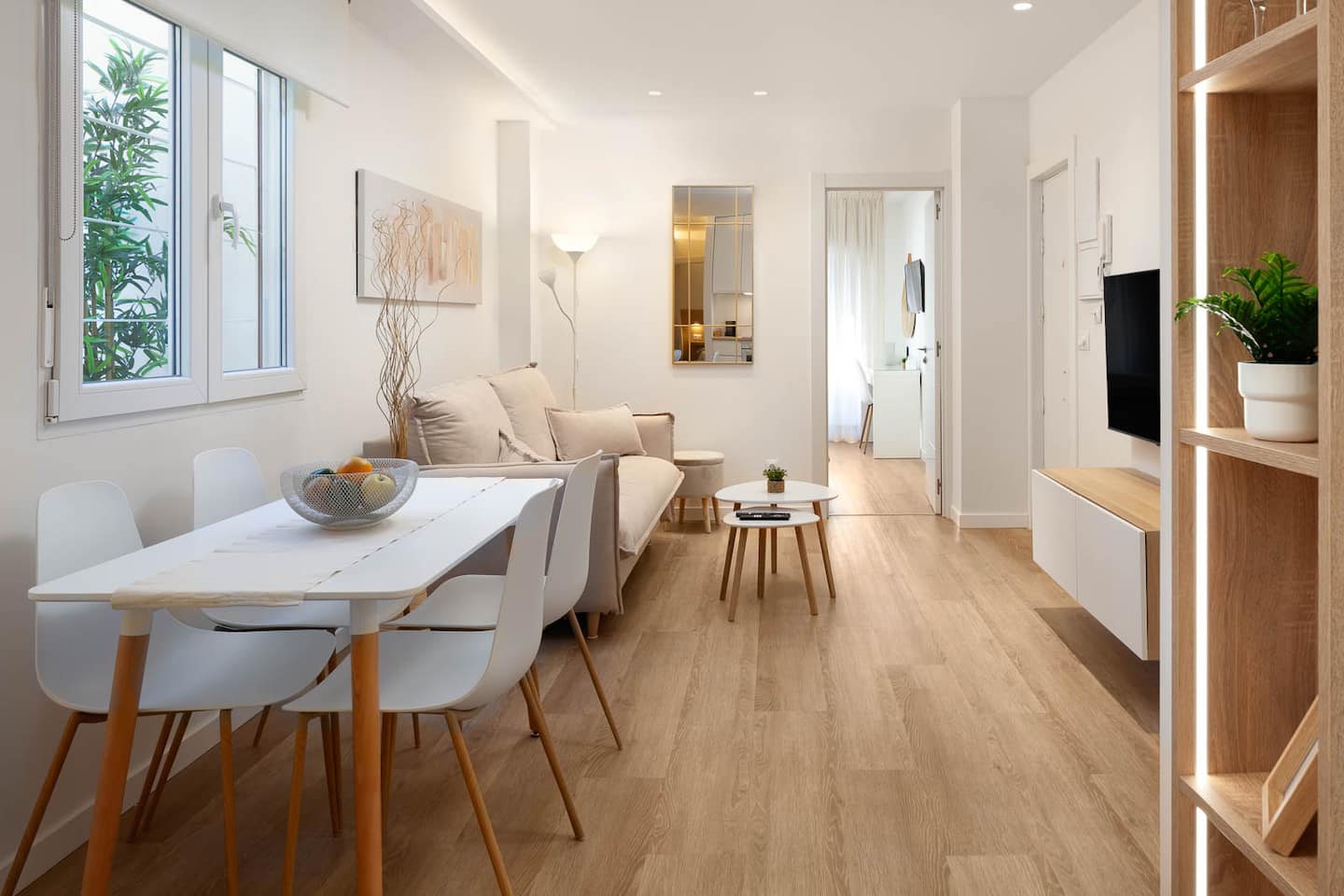
In El Molinillo, a 7-minute walk from the Cathedral, the apartment has a bright living room with a table for six, two bedrooms and a patio-terrace; the Salamanca market is a minute away. A quiet neighbourhood to come home to with wet shoes.
- If the sky clears: Málaga in 3 days. And if you’re coming in December: Christmas in Málaga.
Keep reading
Málaga in 3 days: a slow itinerary
A relaxed 3-day plan for Málaga: old town, museums and markets, and a final day by the sea. With real stops from our local guide.
Where to stay in Málaga: a neighbourhood guide
Old town, El Molinillo, La Trinidad or by the beach: which Málaga neighbourhood suits your trip, explained by local hosts.
Málaga for couples: a slow weekend escape
Sunsets, rooftop terraces and unhurried culture: ideas for a romantic Málaga getaway and where to stay as a couple, by local hosts.
Staying in Málaga?
Boutique direct-booking apartments in the centre and by the sea. Best price guaranteed, with local hosts.